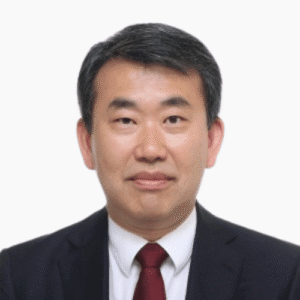
Jihwan Song
Founder CHA University & iPS Bio
Jihwan Song, D.Phil., is Professor and Chair of the Department of Biomedical Sciences at CHA University in the Republic of Korea and Founder and CTO of iPS Bio, Inc., a biotechnology company developing induced pluripotent stem cell (iPSC)-based therapeutics. He received his B.Sc. and M.Sc. degrees from Yonsei University and earned his D.Phil. in Developmental Biology from the University of Oxford. He subsequently completed postdoctoral training at the Whitehead Institute for Biomedical Research (MIT), Massachusetts General Hospital/Harvard Medical School, the University of California, Irvine, and McLean Hospital.
Prof. Song has been actively engaged in international stem cell research initiatives. He is a founding director and Vice Chair of the Asian Alliance for Stem Cells and Regenerative Medicine (AASCRM) and served as a Director of the Global Alliance for iPSC Therapies (GAiT) for the past ten years. He previously served as President and subsequently Chair of the Board Committee of the Korean Society for Stem Cell Research (KSSCR).
He is also actively involved in the International Society for Stem Cell Research (ISSCR), contributing to the Manufacturing, Clinical Translation, and Regulatory (MCTR) Committee and the Membership and International Outreach Committee (MIOC), and participated in the ISSCR Working Group that developed the ISSCR Standards for Human Stem Cell Use in Research. He is also an active member of the International Stem Cell Biobanking Initiative (ISCBI) and the International Stem Cell Forum (ISCF).
His research focuses on developing clinical-grade HLA-homozygous iPSC-derived neural cells for regenerative therapies targeting neurological disorders, particularly Huntington’s disease. His group also utilizes patient-derived iPSC models and brain organoids to facilitate drug discovery for neurodegenerative diseases.
Seminars
- Overview of iPS Bio’s translational strategy for Huntington’s disease, integrating disease-modifying small-molecule approaches with allogeneic iPSCderived neural precursor cell therapy
- Exploring the preclinical development of iPS Bio’s therapeutic programs, including patient-derived iPSC disease models, in vivo efficacy studies, mechanism-of-action considerations, and translational biomarkers
- Revealing key challenges and opportunities in advancing Huntington’s disease therapeutics toward clinical translation, including CMC, safety, regulatory strategy, patient selection, and global collaboration